Roleplaying as a Bridge
Aligning Cross-Functional Teams for Rapid Service Innovation
Overview
When an automotive manufacturer prepared to launch their first electric vehicles as a premium offering, they needed to rapidly transform their mobile repair service to meet luxury customer expectations. After four months of stalled progress, I designed and facilitated an immersive two-day workshop using roleplaying to align cross-functional teams with vastly different backgrounds—from dealership mechanics to corporate strategists—resulting in a market-ready prototype in just 12 weeks.
The Challenge
The stakes
Stalled progress:
Previous team had struggled for 4 months without reaching a testable solution
Timeline pressure:
First electric vehicles launching in 6 months
Complex ecosystem:
Service required coordination between corporate teams, dealerships, mechanics, and digital products
The Team Dynamics Challenge
The customer experience team included stakeholders from across the business—most without digital product experience and new to participatory design methods. The project also required deep input from field technicians and mechanics to ensure technical feasibility. These groups had limited experience collaborating, spoke different professional languages, and needed to rapidly align on a premium service vision.
Timeline pressure: First electric vehicles launching in 6 months
New territory: Transitioning from mass-market to luxury customer base
Complex ecosystem: Service required coordination between corporate teams, dealerships, mechanics, and digital products
What Made This Difficult
- No one team had full visibility into all the pieces that needed to align
- Electric vehicles introduced critical new constraints (software updates could render vehicles undrivable if interrupted)
- Premium service expectations required reimagining the entire offering, not just incremental improvements
- Physical service equipment, digital tools, and human interactions all needed to work seamlessly together
The Approach: Roleplaying as Strategic Facilitation
Why Roleplaying?
In previous smaller projects, I had successfully used roleplaying to help product owners understand vehicle repair experiences and identify solutions to customer complaints in low-pressure settings. I recognized that this methodology could:
- Build confidence in participatory design methods for team members new to this approach
- Bridge knowledge gaps between groups who rarely worked together
- Create shared understanding through embodied experience rather than abstract discussion
- Surface hidden assumptions about how the service actually worked
- Generate actionable insights that pure ideation workshops weren’t producing
Workshop Design: Two-Day Immersive Experience
I designed a structured two-day workshop that would take stakeholders from learning to ideating to prototyping.

Day 1: Immersion & Roleplay
Morning: Context Building
- Rides in pre-launch electric vehicles to experience in-vehicle technology firsthand
- Discussions with dealership service managers and master mechanics about their current offerings and challenges
- Incorporated real feedback into roleplay scenarios
Afternoon: Roleplay Sessions in Authentic Environment
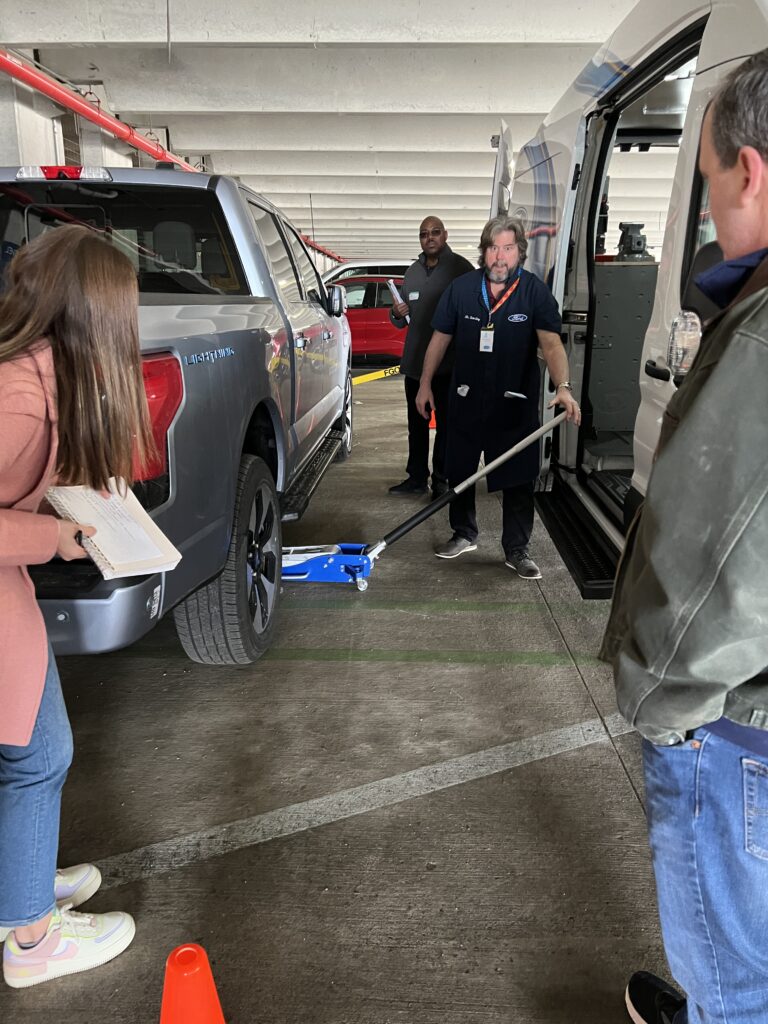
We moved to an actual mobile service setup in a parking garage with prototype service vans and pre-launch vehicles.
Structure of Each Roleplay:
- 3 roles per scenario: Customer, Mechanic, Service Manager, and Technologist
- Scenario variety: Pulled from a hat to keep energy high
- Real-world complications included challenges like:
- Dog escaping from vehicle during service
- Network/WiFi connectivity dropping during critical software updates
- Deaf customers requiring communication accommodations
- Premium customer expectations around vehicle care
Day 2: Synthesis & Prototyping
Morning: Pattern Recognition
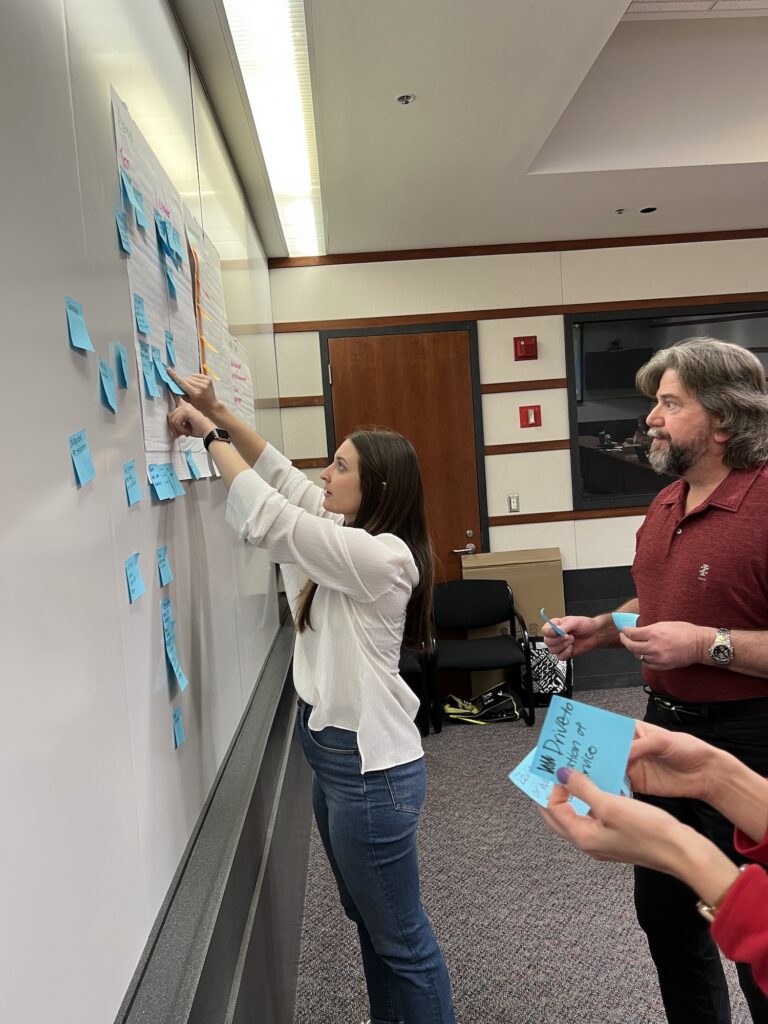
- Grouped insights from sticky notes
- Identified themes across scenarios
- Surfaced critical gaps in equipment, connectivity, and communication
Afternoon: Defining the Ideal Experience
- Refined the ideal service experience collaboratively
- Defined equipment modifications needed
- Created solutions for connectivity issues
- Parallel-pathed two offerings for immediate and future implementation
Key Insights from Roleplaying
What We Learned That Traditional Methods Wouldn’t Have Revealed
Equipment & Infrastructure
• Found opportunities to expand service capabilities quickly
• Identified need for smaller, less expensive repair vehicles
• Discovered connectivity was mission-critical for EVs requiring software updates
Service Experience
• Dedicated customer contact aligned with luxury expectations
• White-glove enhancements needed throughout experience
• Interior refresh would differentiate premium service
Communication & Accessibility
• Importance of proactive communication about timing
• Messaging capabilities could serve customers with auditory disabilities
• Need for sign language interpreter services
Cross-Team Collaboration
• Product teams learned requirements that would have been missed
• Mechanics understood technical constraints corporate teams didn’t know existed
• Corporate teams had customer insights field teams hadn’t considered
The Solution: White-Glove Mobile Service
Core Offering
- Dedicated customer contact throughout vehicle ownership
- Interior refresh with every service appointment
- Enhanced communication protocols
- Tech-focused appointments using existing van fleet
Infrastructure
- Identified less expensive repair vehicle for rapid expansion
- Parallel-pathed EV-specific vans with battery tool integration
- Connectivity solutions for software update reliability
Service Standards
- Documented service experience flows
- Created training for dealership adoption
- Ensured accessibility accommodations were standard
Impact & Results
Core Offering
12 weeks
4 months of stalled progress was made up in 12 weeks from assignment to market-ready prototype
Infrastructure
300%
Year-over-year increase in completed mobile services
Service Standards
34%
Increase in customer satisfaction scores
Long-term Results
- Mobile service offering ready the moment electric vehicles launched
- Successfully aligned corporate teams, dealerships, and field technicians
- Client requested further immersive workshops after seeing the team’s success
Process Innovation
- Created replicable workshop model for future service innovation
- Facilitated communication across business units that rarely collaborated
- Bridged corporate/dealership relationship gaps
- Enabled product teams to work directly with vehicle mechanics and technicians
Methodology Breakdown
Why This Workshop Succeeded Where Others Failed
1. Embodied Experience Over Abstract Discussion
Roleplaying moved the team from talking about service to experiencing it. When someone played a customer whose software update failed, the urgency became visceral—not theoretical.
2. Low-Stakes Learning Environment
New participants in design processes could experiment and fail safely. The ‘pulled from a hat’ scenario approach kept energy high and removed pressure to have perfect ideas.
3. Authentic Context
Using real vehicles, actual service vans, and a parking garage setup grounded insights in reality rather than conference room imagination.
4. Diverse Expertise in the Room
Having mechanics, managers, technologists, and corporate strategists together meant solutions were both innovative and feasible from the start.
5. Structured but Flexible
Clear roles and scenario structure provided guardrails, but the randomized scenario selection and open observation allowed unexpected insights to emerge.
When to Use This Approach
Roleplaying workshops work best when:
- Multiple stakeholder groups need to align around a shared vision
- Physical and digital experiences must work together seamlessly
- Team members have varying levels of design thinking experience
- Abstract discussions haven’t produced actionable solutions
- Timeline pressure requires rapid alignment and prototyping
Impact & Results
Key Takeaways
For Design Leaders
- Match methodology to team dynamics: Roleplaying broke through barriers that traditional workshops couldn’t address
- Bring authentic context: The parking garage, real vehicles, and actual equipment were critical to generating actionable insights
- Design for participation: Structure that accommodates varying experience levels enables broader contribution
- Document while doing: Sticky notes during observation captured insights in the moment before they were lost
For Organizations
Immersive methods create replicable success: Client requested more workshops after seeing results
Cross-functional collaboration accelerates innovation: Mechanics and strategists together solved problems neither could alone
Embodied experience builds empathy: Alignment faster than presentations and specifications
Investment in facilitation pays dividends: Two days of intensive workshop work eliminated months of stalled progress
Project Details
Role
Experience Design Lead
Client
Ford
Team Members
Experience Strategist: Marli Thurow
Experience Strategy Director: Eric Garza
UI Designer: Chelsey Reusch
Process & Methodologies
CX / Service Design
Role playing
Brainsteering
Ideation Workshops (Virtual, In-Person and Hybrid)
Customer Journey Mapping
Rapid Validation Studies