
Experience Mapping
Problem
As part of the overhaul of the service & repair business, the team encountered inconsistent approaches, unclear expectations, and complex solutions that existed in silos. Ford needed an approach that was flexible enough for teams working on various parts of the experience to share a common language & documentation while allowing for the flexibility required by different types of experiences.
*This is a deeper dive into the creation of a process rather than the design of the experience itself. You can find information about the projects referenced and that contributed to the creation and testing of this process in the other featured Ford projects.
Solution
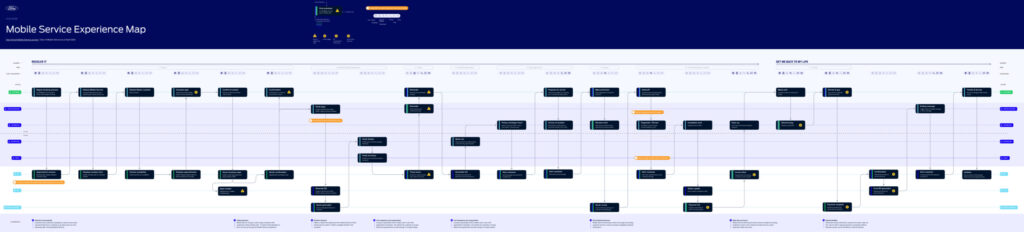
I designed a hybrid document that combined elements from service blueprints, user journeys, comms plans, systems diagrams, and user flows that could be started in collaborative sessions and easily updated as decisions were made and features launched. The final document, dubbed an Experience Map, features prominently in my work at Ford, as it pushed the entire CX team forward in their experience expertise. The standard documentation opened communication across functional teams, created clear definitions and expectations for designers, product owners, and developers, and increased executive understanding of both north star ideas and practical outcomes.
The Approach
My team was bridging the gap at the intersection of the launch of electric vehicles, an overhaul of dealership tools for managing maintenance and repair services, customer tools for booking & scheduling and the transition of payment providers.
When working on the remote payment tool, we ran into a disconnect: our team had handed off the official “user flow” template, but the development team kept telling leadership we hadn’t provided what was needed. I generated multiple additional artifacts, including swimlane diagrams, data flow diagrams, and more detailed user flows with lo-fi wireframes. None was a single document that truly accounted for the entire experience.
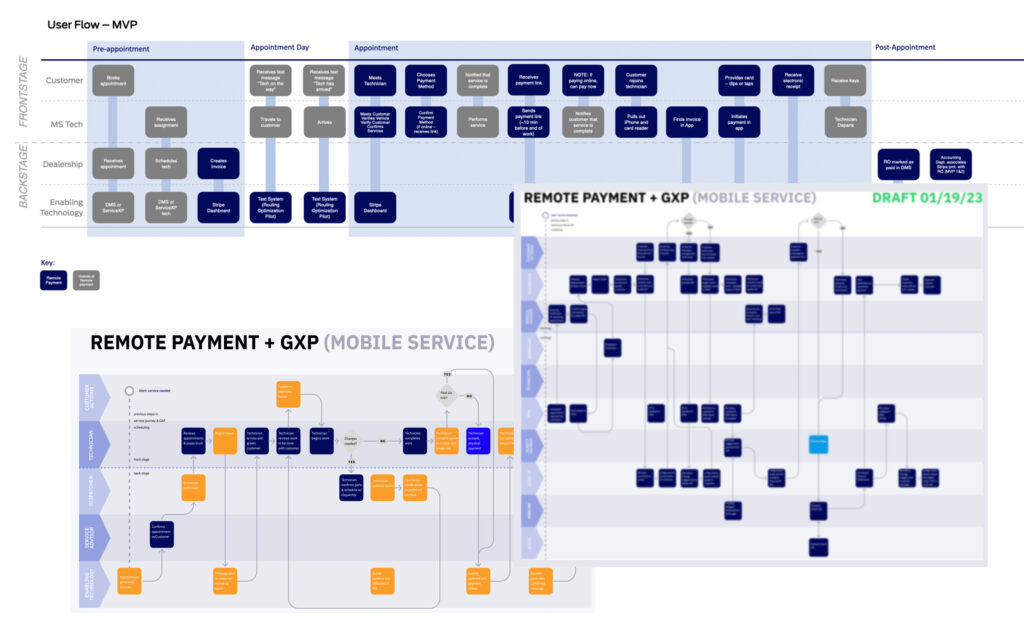
We saw similar documentation issues on less technical projects as well, and I used them as a testing ground to refine documentation.
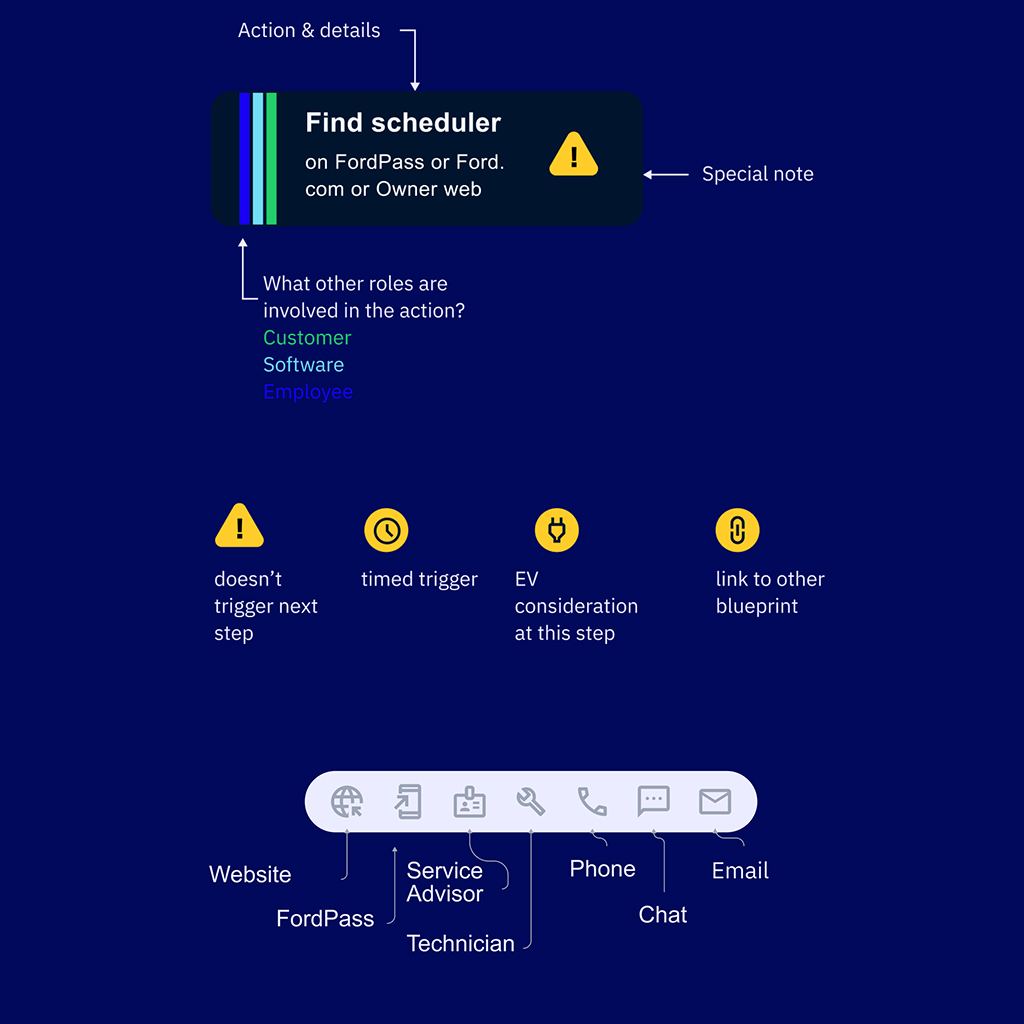
I took the documents we had and used their commonalities to start a timeline while thinking of each step and each attribute it could have: who was doing the action, what was the result, what systems were involved, where someone was interacting with it, what the outcome was, and if there were any risk factors for that moment in the experience.
Once a format was mostly set, I took the team through a collaborative process to build the artifact and test its viability.
The team faced unique challenges, one of the main ones being that most CX team members had come up through the ranks by working at dealerships or as regional managers. Others were deeply technical engineers. Working collaboratively in an innovation process was new to most members of the Ford team.
Once the ideal journey, features and initial task flows were designed, I brought the team together to build the artifact.
I used role-playing to work through each step that a human would take, but I also assigned someone to be each piece of technology that was needed – placing engineering SMEs in those roles. This resulted in thorough understanding for all parties.
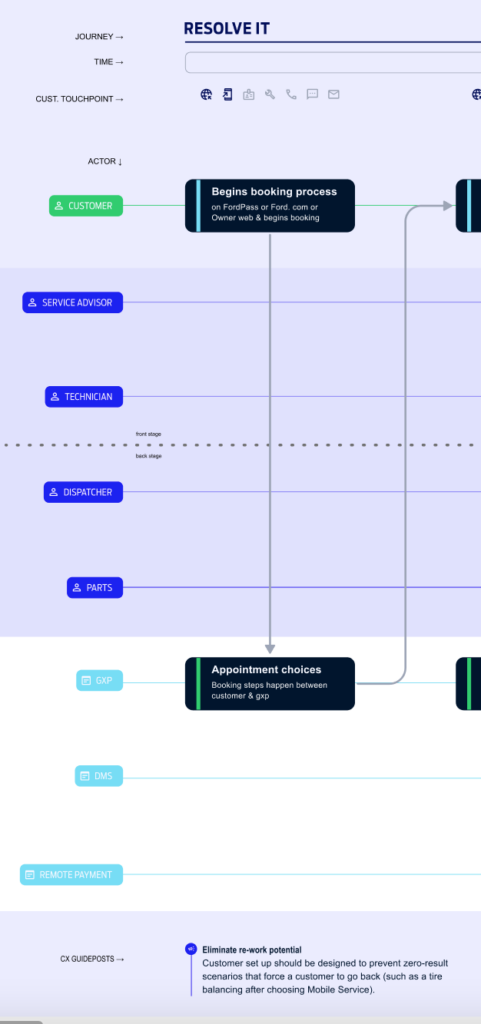
I took the collaborative FigJam artifact and refined it into the Experience Map and it turned around a project that had been stalled due to misunderstandings.
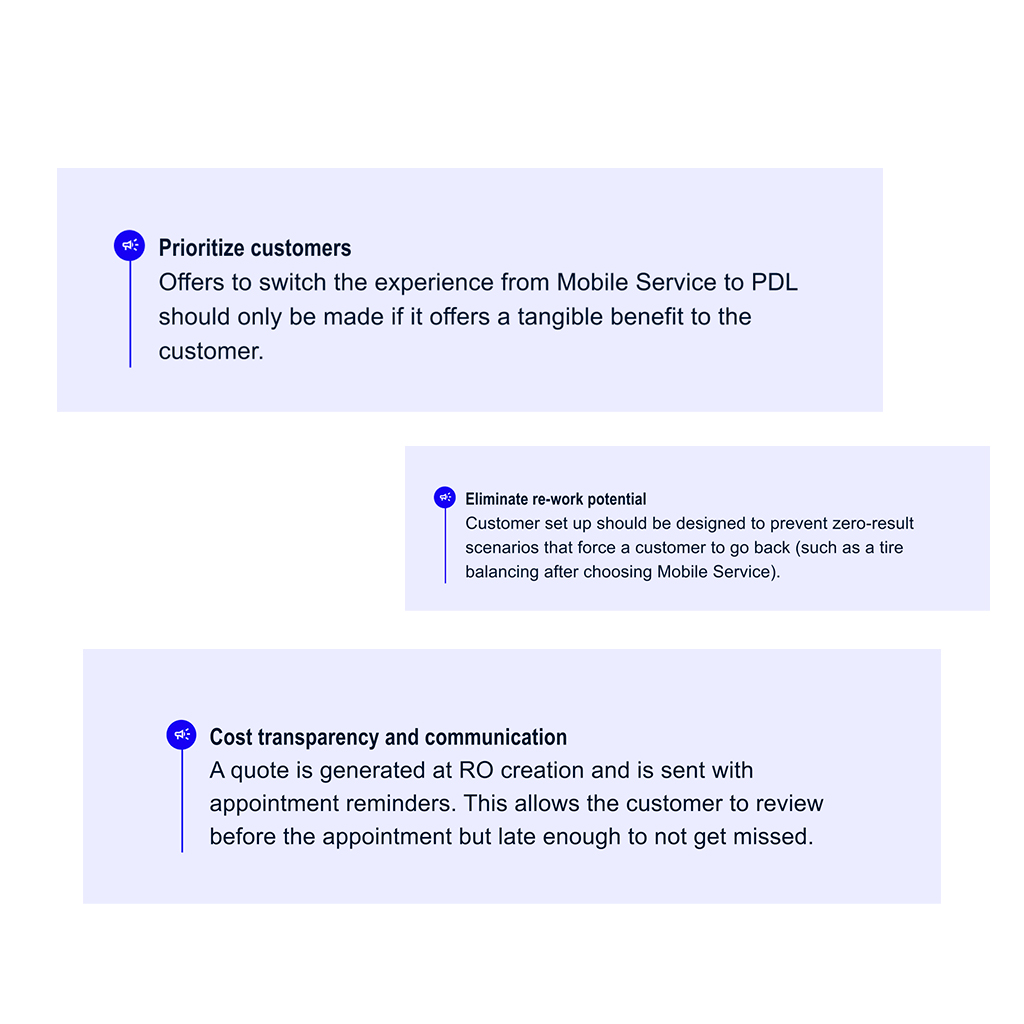
I went on to test the initial map on a second project with overlapping client teams to ensure that we were finding the cracks in the process, and I identified additional features such as experience guideposts.
These were added to communicate some of the human elements from a journey map that don’t typically make it into technical user flows. This ensures that product owners can write effective user stories and understand what the ideal experience is as they take the information back to their teams to execute/build.
Outcomes
The artifact impressed client leadership during a briefing where our clients presented project status, and they asked that these be created for all projects going forward, not knowing the team was going to suggest the process change.
The client team rolled out this artifact across all projects they worked on immediately, so I trained four agency design & strategy teams on the creation process — from data collection through role-play, collaboration, and eventual artifact creation. I also supported our clients in training additional teams in the Ford CX department.
In addition to client satisfaction, several measurable outcomes were achieved. Project timelines were shortened by approximately 8 weeks by reducing back-and-forth communication and unnecessary document creation.
User stories were easier to understand and reduced re-work due to clarity issues by 30% for engineering teams. It also reduced average story points because there was less ambiguity for engineers and UI designers to work through.
Project Details
Role
Experience Design Lead
Client
Ford
Team Members
Experience Strategy: Marli Thurow, Eric Garza
UI Designer: Chelsey Reusch
Process & Methodologies
CX / Service Design
Role playing
Brainsteering
Ideation Workshops (Virtual, In-Person and Hybrid)
Customer Journey Mapping