

Gen AI for Account Personalization
Problem: Why this work mattered
Verizon historically delivered high volumes of “personalized” messaging, yet customers experienced the account environment as programmatic, dense, and transactional, rather than genuinely relevant. Existing personalization was driven by campaign calendars and marketing priorities rather than actual customer context or needs.
Verizon challenged our team to explore how generative AI could enhance the account management experience—but the deeper opportunity was to rethink the mental model of personalization itself: rather than what can AI do?, the question became how can personalization feel personally valuable?
Execution-focused personalization does not inherently make experiences feel personal to end users. This distinction matters.
Strategic Thesis
An execution-focused vocabulary for personalization does not directly contribute to experiences that feel personal to end users.
Verizon’s personalization was programmatic and cold — information was sent without clear hierarchy, relevance, or context — leading to customer confusion, low engagement, and diminished trust.
This thesis framed the work: personalization must be contextual, helpful, and relational, not just targeted or algorithmically generated.
Research & Insight
Secondary research reinforced industry expectations
Customers commonly reported feeling that they “fit” their plans but were unaware of customization options, suggesting low personalization awareness and trust.
- 84% of customers view personalized experiences as equally important as the core products themselves — placing personalization on par with the fundamental value proposition of the service.
- Personalization efforts often trigger a privacy–benefit paradox where customers want relevance but also desire control, transparency, and clear value in exchange for their data.
- Competitors such as T-Mobile were advancing contextual, proactive bill transparency and personalized “helpful info” modules, setting new customer expectations in the telco space.
End-user research confirmed experiential gaps
- Users felt overwhelmed by dense, untargeted messaging with unclear relevance.
- Messaging hierarchy was absent, making it difficult to discern what mattered most.
- Customers wanted personalized recommendations that anticipated needs and explain why they were presented.
Design Implications
From these insights, we derived core principles that guided ideation:
- Personalization needs to show why content appears (context)
- It should support useful decision-making (helpful)
- It must feel valuable and coherent as part of the user’s journey (relational)
Approach & Framework
Over a six-week strategic engagement, I led a multidisciplinary team through a design sprint structured around a new personalization framework. Rather than jumping into UI features, we built an evaluation framework grounded in experience heuristics to ensure ideas aligned with our strategic thesis.

Personalization Types (Model)
We defined personalization as experience outcome, not technology:
- Editorial – human-centric content that feels relevant through tone, clarity, and intention
- Targeted/Programmatic – scale-oriented delivery driven by data signals
- Algorithmic – machine learning-powered recommendations
- Generative AI – contextual, adaptive content that fills gaps and anticipates needs
This model helped the team articulate what personalization means in experience terms before exploring technology use cases.
Heuristics for Meaningful Personalization
We defined experience heuristics as strategic filters applied to all ideation.
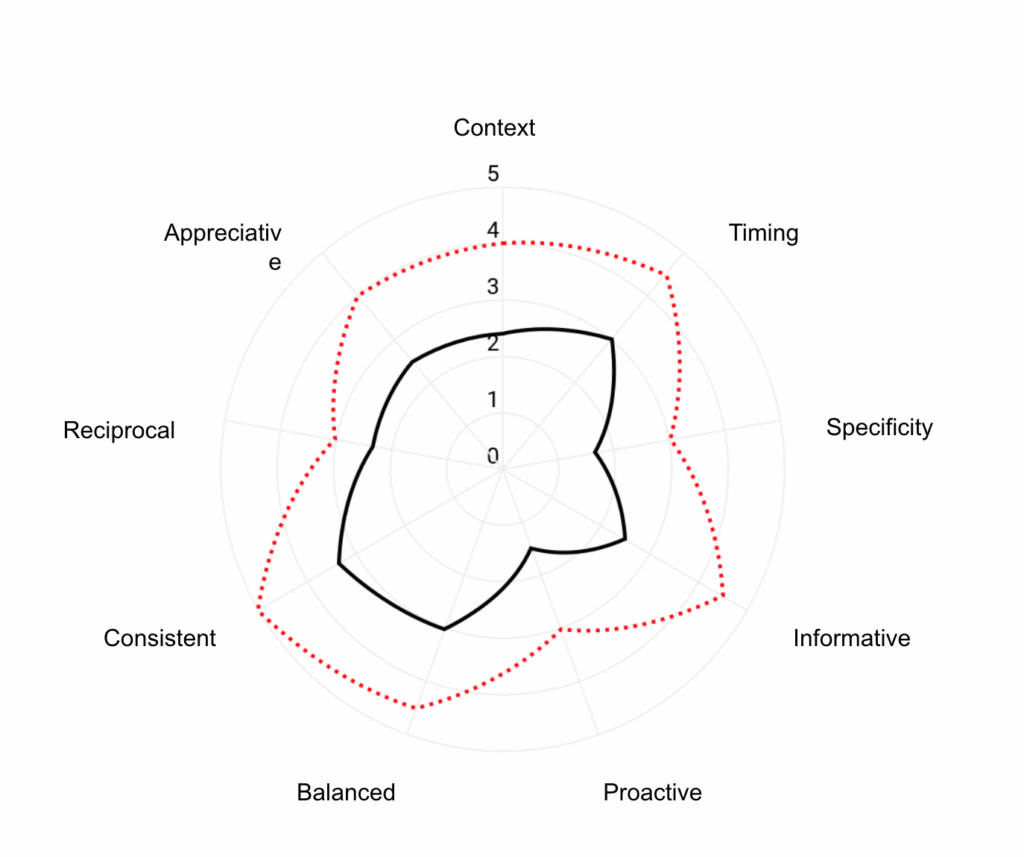
Relevant
The right content for the right person.
- Context. Relationship to events, actions, or content.
- Timing. When and for how long information is presented.
- Specificity. The detail or uniqueness of the information.
Helpful
The value proposition solves a problem.
- Informative. Direct information re: next steps.
- Proactive. Suggests next steps that are relevant to the customer type.
- User-Centered. Products are marketed when they align with where the customer is in their journey/lifecycle
Relational
This interaction feels valuable.
- Consistent. We’re consistent in our follow-up and follow-through.
- Reciprocal. Our content marketing and business goals are aligned with customer needs.
- Appreciative. Our content strategy evinces authentic appreciation without the need to state it directly.
Moving to continued success
I defined a series of scores that allowed us to rank concepts against these heuristics, take inventory of the current state of personalization in the Verizon account dashboard, and identify where we should benchmark.
Feature Ideation & Prioritization
Using the framework and heuristics, the team generated concepts that aligned personalization to user value, not mere message delivery. Concepts were rapidly evaluated using the heuristics and clustered by business and experience value.
Four concepts were pitched and then adopted into the product roadmap for 2025:
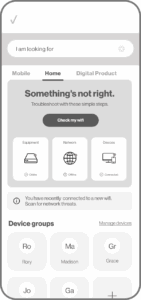
Contextual
Concept: Account launchpad tailored by plan/device
Rationale: Shows why content appears, increasing relevance and reducing noise

Timely
Concept: Protection product offer during open enrollment
Rationale: Aligns promotional content to when customers are most likely to act
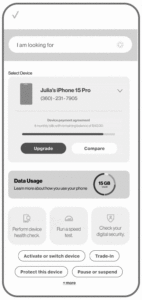
Specific
Concept: Device upgrade comparison tailored to current model
Rationale: Increases decision support and reduces ambiguity
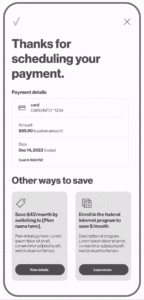
Reciprocal
Concept: Churn-risk users offered plan-right-sizing
Rationale: Connects user signals to proactive, beneficial offers
Each concept reframed personalization from isolated pushes to meaningful experience intersections where user intent, timing, and context converge.
Closing Thoughts
Outcomes & Organizational Impact
Delivered a personalization strategy and evaluation framework that codifies human-centered principles for future work.
Developed an evaluation tool for future personalization features to ensure alignment with user and business goals.
Pitched nine concept ideas, of which four were adopted into Verizon’s 2025 roadmap — a strong signal that the strategy resonated with stakeholders and product owners.
Shifted internal dialogue from “apply AI everywhere” to “apply AI where it enhances human relevance and clarity.”
Reflection
This engagement exposed a broader truth about personalization: scale and technology do not inherently produce meaningful experience. Genuine personalization requires framing content around customer context, timing, and relational value. AI should serve to fill gaps and anticipate needs — not replace human clarity.
This shift in mindset has positioned Verizon to deliver personalization that feels not just targeted but truly relevant and supportive of customer goals.
Project Details
Role & Leadership
Title: Associate Director, UX
Responsibilities:
- Balanced user needs and business goals to drive roadmap adoption
- Shaped project vision and defined the strategic thesis
- Led cross-functional team to generate, evaluate, and prioritize concepts
- Developed and evangelized heuristics and evaluation framework
Client
Verizon Wireless
Team Makeup
Strategy Director, Senior Interaction Designer, Senior Strategist, Senior Content Strategist, Senior UI Designer, Creative Director
Process & Methodologies
Design Sprint
Wireframes
Animated Interactions